Wondering how to make your backyard feel like a real part of your home in Northwest Houston? You are not alone. In this part of the Houston area, outdoor living only works well when it is designed for heat, rain, and everyday use, and that is exactly why smart planning matters. If you are thinking about enjoying your home more now or making it more appealing when it is time to sell, this guide will walk you through practical ideas that fit the local climate. Let’s dive in.
Why outdoor living matters in Northwest Houston
In the Houston area, outdoor space can do a lot more than look nice. When it is set up well, it can function like an extra room for relaxing, dining, cooking, or gathering with friends and family. That is a big reason outdoor living continues to stand out with both current homeowners and future buyers.
The local climate also shapes what works. Houston’s 1991 to 2020 climate normals show average highs above 92 degrees in June and nearly 95 degrees in August, along with more than 51 inches of annual precipitation. With summer heat, warm nights, and heavy rainfall in the mix, the most successful outdoor spaces focus on comfort, shelter, and drainage rather than just decoration.
Start with comfort first
A beautiful patio is not enough if it feels too hot to use. In Northwest Houston, shade and airflow are central to making outdoor space comfortable through much of the year. A wide-open patio may look appealing at first, but it often falls short during the hottest parts of summer.
Think of your outdoor space the same way you would think about a living room. You want a place where you can actually spend time, not just something to look at through the window. That usually means combining cover, seating, and thoughtful layout so the space feels inviting and functional.
Add shade and cover
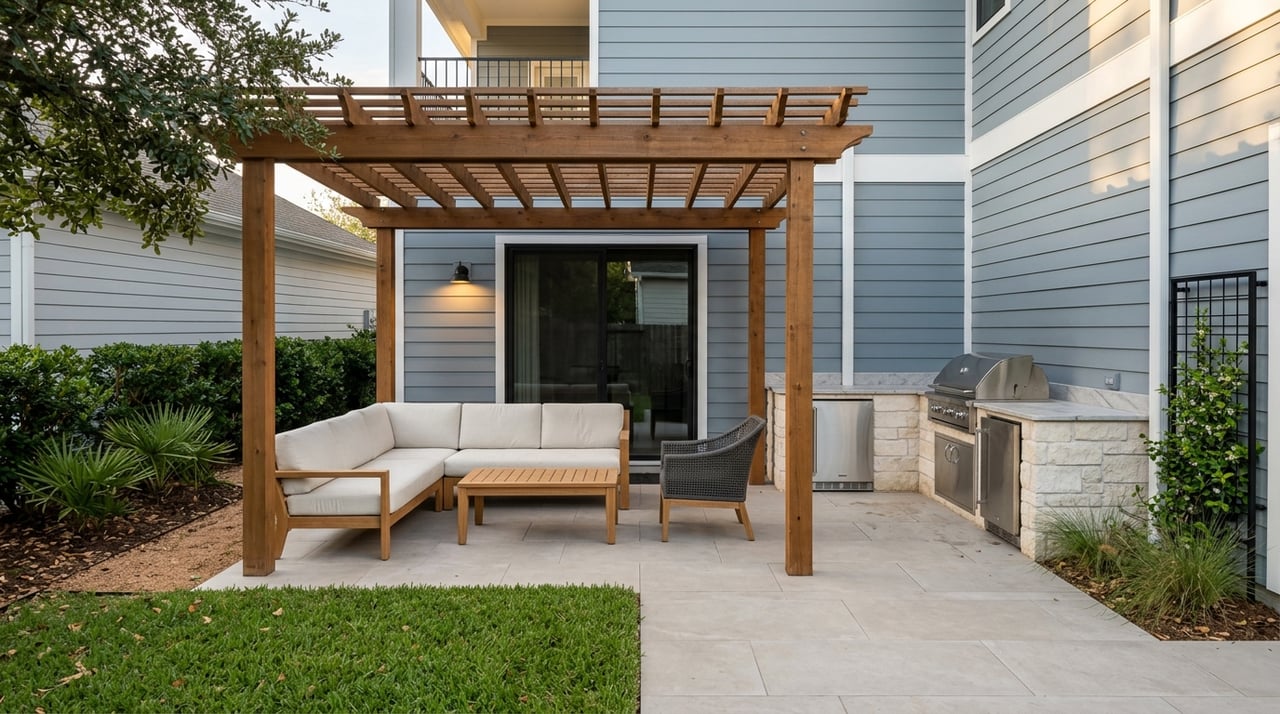
A covered patio, pergola, or other overhead structure can make a major difference in day-to-day comfort. Covered spaces help reduce direct sun exposure and give you a more dependable area to use even when the weather shifts.
Pull-down shades can add another layer of protection, especially when the sun hits at an angle in the late afternoon. If you want the space to feel usable for meals or conversation, this kind of flexible shade often matters just as much as the roof itself.
Improve airflow and lighting
Fans are one of the simplest ways to make a patio more comfortable. In hot, humid conditions, moving air helps the space feel more pleasant and more inviting for longer stretches of the day.
Lighting also helps your outdoor area work harder for you. Soft lighting around seating and dining zones can make the space feel finished and extend its use into the evening without requiring a major upgrade.
Create outdoor zones that feel intentional
One of the smartest ways to approach outdoor design is to think in zones. Instead of treating the yard like one large open area, break it into simple spaces based on how you actually want to use it. That approach can make even a modest backyard feel more useful.
Current yard design trends point toward distinct areas for cooking, dining, relaxing, gardening, and activity. In Northwest Houston, that room-by-room mindset works especially well because it helps you make practical decisions instead of overbuilding.
Dining zone
If you enjoy eating outside, start with a clearly defined dining area. A table under a covered section of the patio often works better than placing it in the middle of open yard space.
You can make this area feel more complete with lighting, a fan, and furniture placement that creates a sense of structure. Even simple touches can help the space read like an outdoor room instead of just a slab behind the house.
Relaxation zone
A second zone can focus on comfort and downtime. Soft seating, a fire pit, and even an outdoor TV or sound system are popular additions for homeowners who want a space to unwind or entertain.
The key is to match the setup to your actual lifestyle. If you use the space for quiet evenings, a smaller seating group may be more useful than a large built-in feature that takes up room but sees little use.
Cooking zone
Outdoor kitchens remain popular, but bigger is not always better. For many homeowners, a practical setup with a grill and counter space offers plenty of function without the cost or maintenance of a larger installation.
If you cook outside often, you might consider added storage, refrigeration, or bar-height seating. But the best design is usually the one that supports how you live, not the one with the longest list of features.
Plan for rain and drainage
Northwest Houston outdoor living has to account for heavy rain. The Houston area averages 51.84 inches of annual precipitation, and the record one-day rainfall has reached 16.07 inches. That makes water management a critical part of design.
A space that drains well will stay more usable and easier to maintain. It can also help reduce muddy spots, standing water, and the wear that often comes from repeated soaking and slow drying.
Choose surfaces that dry out well
Permeable hardscape is one feature that aligns well with local conditions. Surfaces that help water move through or shed more effectively can support a yard that bounces back faster after rain.
This matters if you want your outdoor area to function consistently, not just during stretches of perfect weather. A smart layout can help protect both the look and usefulness of the space over time.
Support healthy soil
Healthy soil helps water soak in instead of running off too quickly. Adding mulch each year and maintaining soil quality can support better drainage and easier plant care.
That may sound like a small detail, but it can have a real impact on how well your yard handles typical Houston weather patterns.
Keep landscaping low maintenance
For many homeowners, the most appealing outdoor space is one that looks good without creating constant work. Low-maintenance landscaping is especially valuable in the Houston area because outdoor water use can account for 30% to 70% or more of total household water use.
That means smarter planting choices can affect both upkeep and utility costs. If you are creating or refreshing outdoor living space, the landscape around it should support the same goal of comfort and simplicity.
Group plants by water needs
One practical strategy is hydrozoning, which means grouping plants with similar water needs together. This can make irrigation more efficient and help plants stay healthier with less guesswork.
Weather-based or soil-based irrigation controllers can also support more efficient watering. The goal is not just to save water, but to create a landscape that is easier to manage season after season.
Use Houston-friendly plant options
Texas A&M AgriLife’s Houston plant guidance offers several useful references for local landscapes. Texas sage is a good option for full sun and good drainage, while yaupon is known as a broadly adaptable evergreen.
For tree choices, anaqua is noted as drought resistant, and river birch can fit wetter soils with light shade. These kinds of locally adapted plants can help your yard stay more resilient with less intensive care.
Be realistic about turf
If you want grass, St. Augustinegrass is widely used in Texas and is known for superior shade tolerance among warm-season turfgrasses. It also has deep rooting potential and drought tolerance, which helps explain its popularity.
Even so, it still needs about 4 to 6 hours of light to survive. In heavily shaded areas, it may make more sense to use mulch or shade-tolerant perennial plantings instead of trying to force turf where it is unlikely to thrive.
Focus on usable value, not just upgrades
If you are making changes with resale in mind, the best outdoor projects are often the ones that feel practical and easy to maintain. Buyers are paying attention to comfortable living space and to the ongoing costs of operating a home. That makes climate-appropriate outdoor design especially relevant.
A clearly defined outdoor room with seating, shade, and a simple cooking area can feel like an extension of the home. It gives buyers a clear picture of how the space can be used, which is often more effective than a yard filled with features that feel disconnected or high maintenance.
For sellers, this is a helpful mindset. You do not always need a large or luxury setup to make an impression. In many cases, a clean, intentional outdoor space that fits Houston conditions can be the stronger move.
Whether you are getting your home ready for the market or looking for a house with better outdoor potential, the right guidance can help you focus on what adds real day-to-day value. If you are planning your next move in the west and northwest Houston area, Kesley Flanagan can help you evaluate what features make sense for your goals.
FAQs
How can you make a patio usable in Northwest Houston heat?
- Focus on shade, airflow, and cover. A roof, pergola, pull-down shades, and fans can make a patio much more comfortable during hot weather.
What makes outdoor living space more practical for resale?
- A defined outdoor room with seating, shade, and a simple cooking area often feels more usable than an open yard or an overbuilt feature set.
What landscaping ideas help reduce maintenance in Northwest Houston?
- Group plants by similar water needs, add mulch annually, maintain healthy soil, and use efficient irrigation when possible.
What plants are useful references for Houston-area yards?
- Texas sage, anaqua, yaupon, and river birch are all cited in Houston-area plant guidance for conditions such as full sun, drought resistance, adaptability, or wetter soils.
Is St. Augustinegrass a good choice for shaded yards in Northwest Houston?
- It can work in moderate shade because it is one of the most shade-tolerant warm-season grasses, but it still needs about 4 to 6 hours of light. In dense shade, mulch or perennial plantings may be a better fit.