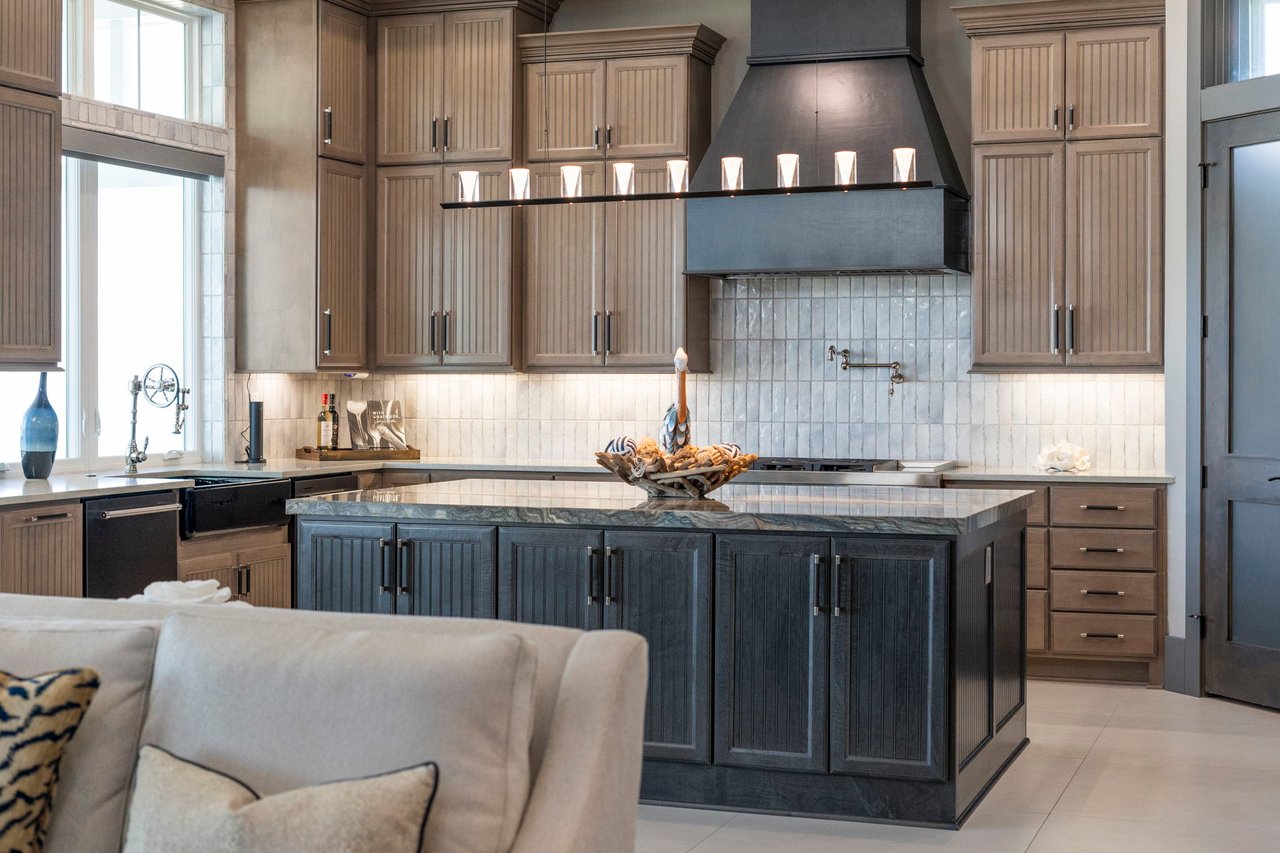
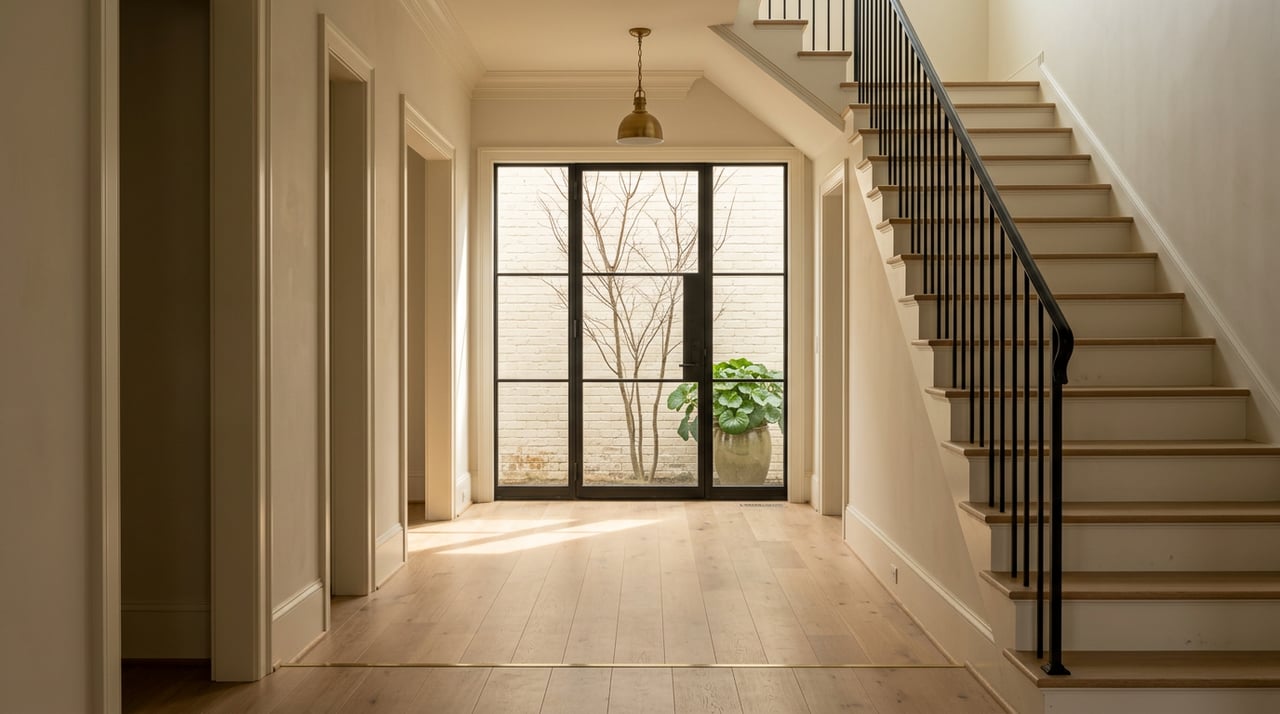
Over a seven-week stretch this summer, two properties changed hands in West University Place for almost exactly the same amount of money. One was a 3,570-square-foot house on Westchester Ave, updated and move-in ready, which closed July 31, 2026. The other was a 10,000-square-foot lot on Belmont St with no home on it at all, which closed June 10, 2026. Both landed in the same $1.64 million to $1.89 million range.
If you are comparing West University Place to another west Houston neighborhood using a single "median home price," you are averaging together a finished house and an empty lot as if they were the same product. They are not, and the gap between them is the whole story of how this market actually works.
Same Street, Ten Days Apart
The clearest illustration sits on one block. On July 21, 2026, a 5,600-square-foot single-family home at 6439 Westchester Ave closed in a reported range of $3.32 million to $3.83 million. Ten days later, on July 31, a 3,570-square-foot home a few doors down at 6709 Westchester Ave closed for $1.64 million to $1.89 million. Take the midpoint of each range and you get roughly $638 per square foot for the first house and about $494 per square foot for the second, a gap of close to 30 percent on the same street in the same ten-day window.
Neither price is wrong. They are two different eras of construction sitting on the same road: one home built or renovated to the current standard of finish, one older and priced accordingly. A "median Westchester Ave price" that blended the two would describe neither.
Three Trackers, Three Different Stories
This is not a quirk of one street. Look at how the major home-value trackers described West University Place's overall market at different points in summer 2026. Zillow's home value index, last updated June 30, 2026, put the neighborhood's average home value at $1,828,597, up 2.3 percent over the prior year. Redfin's live market page, pulled in early August 2026, showed the average sale price at $1.53 million, down 32.5 percent year over year, while its median sale price in that same snapshot was listed at $2.0 million, up 31.4 percent. Orchard's tracker, also pulled in early August 2026 and covering the trailing 30 days, put the median at $1.64 million, down 23.1 percent year over year, based on 13 recorded sales.
The three sources offer snapshots from different points in summer, with headline swings from a modest single-digit gain to 30-plus point moves in either direction. That is not measurement error. It is what happens when a market's monthly transaction count is small enough that a single unusual sale can move the average by double digits.
Why a Dozen Sales a Month Breaks the Math
Compare that to the scale Houston works with elsewhere. The Houston Association of Realtors' June 2026 Housing Market Update reported 8,820 single-family home sales across the metro that month, with the average price up a steady 1.2 percent to $455,159 and the median essentially flat at $345,000. At that volume, one oversized mansion sale or one distressed teardown barely moves the needle.
West University Place trades in a different volume entirely. Across the various trackers pulling data for 2026, monthly closing counts for the area have run anywhere from 13 to the high 20s, depending on the exact boundary each source uses. At that scale, a single $4 million new-construction closing or a single bare-lot sale is not noise buried in a large sample. It is a meaningful share of the entire month's data, capable of swinging the reported average or median by 20 to 30 percent on its own.
Here is what actually closed across a few recent weeks, based on public sale records:
| Address | Closed | Product | Size | Reported Range |
|---|---|---|---|---|
| 6611 Belmont St | Jun 10, 2026 | Lot, no structure value | 10,000 sq ft lot | $1.64M–$1.89M |
| 6709 Westchester Ave | Jul 31, 2026 | Existing home | 3,570 sq ft | $1.64M–$1.89M |
| 6439 Westchester Ave | Jul 21, 2026 | Existing home | 5,600 sq ft | $3.32M–$3.83M |
| 3020 Duke St | Jul 17, 2026 | Existing home | 4,763 sq ft | $2.88M–$3.32M |
| 6634 Wakeforest Ave | Jun 10, 2026 | New construction | 5,523 sq ft | $3.83M–$4.42M |
| 6614 Mercer St | May 15, 2026 | Existing home | Not listed | $3.83M–$4.42M |
Six sales, spanning 11 weeks, ranging from a bare lot to a brand-new 5,500-square-foot house, all reported in the same $1.6 million to $4.4 million band that the market trackers are trying to compress into one median.
The Market Has Been Built This Way Since the 1990s
None of this is new to West University Place. Texas Monthly's reporting on the neighborhood described a builder who summed up the dynamic plainly, saying it was "like buying the potato and getting the steak for free," describing a neighborhood where the value of any lot had come to exceed the value of any house sitting on it. The city's own development history backs that up. Before 1992, West University Place loosened its building rules and opened the door to new construction, and according to the neighborhood's Wikipedia entry, roughly half of the existing houses in the city were torn down and replaced in the fifteen years leading up to 2002.
That cycle has not slowed down. Builders active in West University Place right now include Southern Green Builders, which completed a 4,100-square-foot custom rebuild this summer designed by architect Greg Swedburg, along with Mazzarino Construction and Development, Rockwell Custom Homes, Vita Homes, Covington Builders, Parker-Evans Custom Builders, Laird Custom Homes, and Princeton Building Group, a firm with more than four decades of history building in the neighborhood. Several current listings make the lot-versus-house split explicit rather than implied. One active Southdale-area listing is marketed outright as a "lot value only sale," a 5,125-square-foot parcel accepting cash offers only, with the existing structure described as a teardown and the seller offering no repairs or concessions.
What This Means If You're Comparing Neighborhoods
If you're weighing West University Place against another west Houston area on price alone, the median or average headline you find on a portal will not tell you what you actually need to know. Ask instead what mix of product produced that number: how many of the month's sales were finished homes, how many were land, and how recently the finished homes were built. A neighborhood where half the transactions are raw lots behaves nothing like one where nearly everything sold is a comparable, similarly aged home.
That distinction also shapes what your budget actually buys here. The same $1.6 million to $1.9 million range that closed on a finished, walkable-to-Rice-Village home near shops like Tiny's and Milk & Cookies, or a short walk from Wier Park, closed on an empty lot seven weeks earlier. Neither buyer overpaid. They were shopping in two different markets that happen to share a zip code.
FAQ
Why would a home's median price rise and fall in the same season depending on the source? Because each tracker pulls from a different slice of sales and a different window, and with only a dozen or two transactions a month, one unusually priced closing, whether a bare lot or a new-construction mansion, can shift the reported figure by 20 to 30 percent without any underlying values actually changing.
Is this teardown-heavy pattern unusual for Houston? It is unusual in degree. West University Place's building rules opened the door to new construction decades before most of its neighbors, and the resulting mix of raw land and brand-new homes selling side by side is part of what makes its pricing data behave so differently from the broader Houston market, where the June 2026 HAR update showed a much steadier 1.2 percent average price gain across nearly 8,820 sales.
Does a small sample size mean the neighborhood itself is unstable? No. It means the reported statistics are noisy, not that the underlying real estate is unpredictable. A buyer or seller who looks at comparable sales by product type, rather than a single blended average, gets a far more reliable read than the headline number alone.
If you're trying to make sense of what a specific price actually means on a specific West University Place street, that is exactly the kind of comparison worth walking through with someone who tracks these closings month to month. Topmark Realty Group can pull the recent sales that match what you're actually shopping for, lot or finished home, and tell you what the number really represents. Let's talk about your next move.