
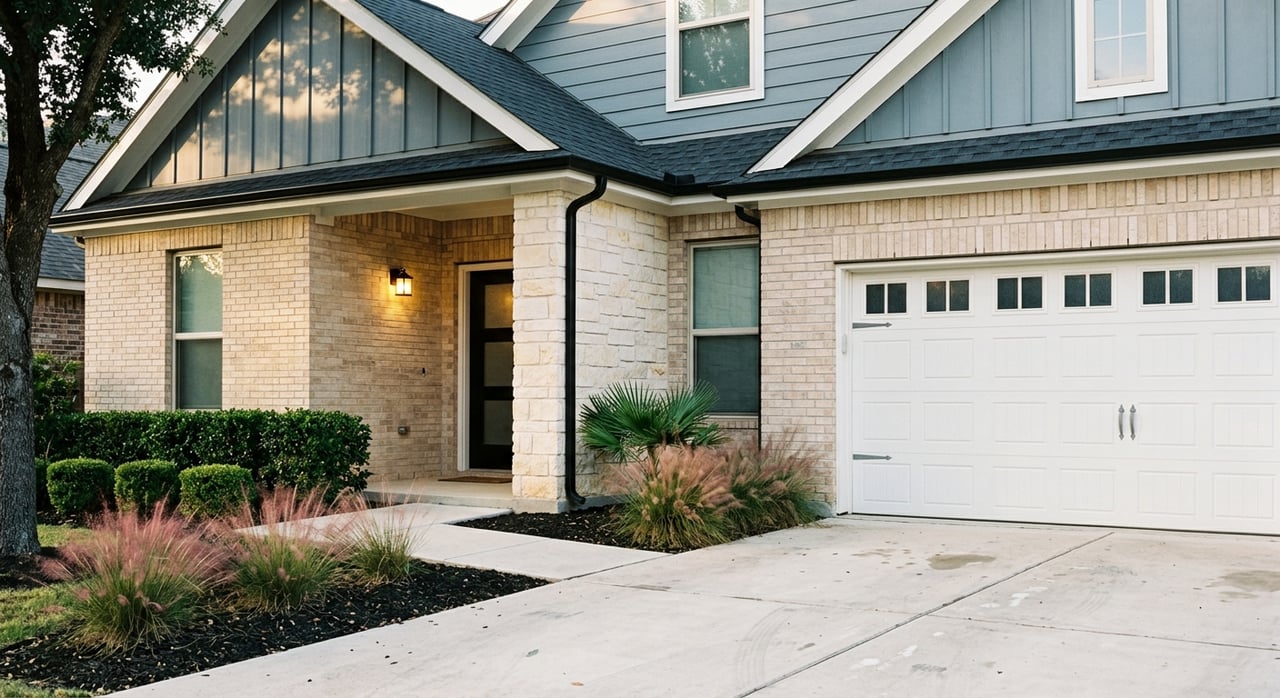
Thinking about buying a single-family rental in Fulshear? You are not alone. This fast-growing Fort Bend County market gets a lot of investor attention, but the numbers here are not as simple as picking any home with a Fulshear address and expecting it to perform. If you want to invest with more confidence, it helps to understand what really drives rentability, costs, and long-term value in this area. Let’s dive in.
Why Fulshear Draws Investors
Fulshear has grown quickly, and that growth is one reason investors keep it on their radar. According to U.S. Census QuickFacts for Fulshear, the city had an estimated 54,629 residents in July 2024, up from 16,856 in the 2020 census.
The city describes itself as a fast-growing community in Greater Houston, located at FM 359 and FM 1093, with access to shopping, dining, and entertainment nearby and a drive of about 20 minutes to Katy. You can review that local context on the City of Fulshear overview page.
For investors, this points to a suburban market with strong household formation and ongoing housing demand. Still, demand in Fulshear is usually shaped more by the specific property, tax setup, and school assignment than by the city name alone.
What the Local Profile Means
Fulshear stands out as a high-owner-occupancy market. Census data shows a 90.0% owner-occupied rate, a median household income of $187,035, a median gross rent of $1,952, and a median owner value of $572,700 in the city.
That same Census profile also shows 34.8% of residents are under 18, an average of 3.49 persons per household, and a 37.8-minute mean commute. In practical terms, that supports the idea that many renters in this market may be looking for space, functionality, and commuter convenience rather than the lowest possible monthly rent.
This matters because a single-family rental in Fulshear often competes on layout and location more than on bargain pricing. If you are evaluating an opportunity here, the property has to fit how people actually live in this part of Fort Bend County.
What Homes Tend to Rent Best
Fulshear is not mainly an older infill market. Fort Bend Central Appraisal District reports that the county added 7,691 new homes in 2024, including 5,292 in Lamar ISD, and its 2025 values report points to continued construction and master-planned development.
That means many investment options are newer suburban homes rather than older properties needing major renovation. For many buyers, this can reduce immediate repair risk, but it can also increase competition from other newer homes on the market.
Based on the local household profile and city location, the homes that often look most rentable are those with:
- Functional floor plans
- Garages
- Fenced yards
- Flexible office or bonus space
- Access to commuter routes
- Clear school assignments
These are practical rentability factors, especially in a market where many households want more living space and daily convenience.
Why Address Matters More Than ZIP Code
One of the biggest mistakes investors make is assuming every Fulshear address works the same way. The City of Fulshear address checker makes it clear that a Fulshear mailing address does not always mean a property sits inside the city limits.
That distinction can affect city services, taxes, and underwriting. If you are comparing two homes that seem similar online, they may carry different tax obligations or fall under different jurisdictions.
This is why a property should be evaluated parcel by parcel. In Fulshear, the exact address can shape your monthly cash flow more than the neighborhood label on the listing.
School District Lines Can Affect Leasing
School zoning is another major variable. The city notes that Fulshear is served by both Katy ISD and Lamar CISD, and city business information also references school-related distinctions within the area.
For investors, the key takeaway is simple: two similar homes can lease differently if they fall under different school assignments. That does not mean one is universally better than another, but it does mean renter demand may not be identical across otherwise similar properties.
When you are underwriting a deal, confirm the actual district and campus assignment tied to the address. Do not rely on broad assumptions based on a subdivision name or mailing address.
Taxes Can Make or Break Cash Flow
In Fulshear, property taxes deserve close attention. The city lists its FY2025/2026 ad valorem tax rate at $0.167903 per $100 of assessed value on its property tax information page.
But that is only part of the story. Fort Bend Central Appraisal District notes that tax rates are set by taxing units, and its 2025 data shows Lamar CISD at 1.1469 and Katy ISD at 1.1171, with nearby municipal utility districts often adding another layer, sometimes in roughly the 0.88 to 1.50 range.
That means your actual tax bill can vary a lot depending on the parcel. In a suburban growth market like Fulshear, this is one of the most important parts of your analysis.
Do Not Count on Homestead Treatment
If you are buying a true rental property, you should not assume it will receive the same property tax treatment as an owner-occupied home. Fort Bend Central Appraisal District states that a homestead exemption applies only to the owner’s principal residence.
That may sound obvious, but it is easy to overlook when you are looking at current tax records tied to a seller who lived in the home. Your future tax picture as an investor may look very different.
For that reason, it is smart to review not just the current taxes shown online, but also how the property may be taxed after closing as a non-homestead rental.
Be Realistic About Rent vs. Costs
Fulshear can be appealing, but this is not a market where every single-family rental naturally cash flows well. Census data shows a median gross rent of $1,952, while the median monthly owner cost with a mortgage is $3,730.
That does not mean a deal cannot work. It does mean you should model numbers carefully and avoid making decisions based only on appreciation hopes or rough rent estimates.
A more conservative pro forma should include:
- Mortgage payment
- Property taxes
- Insurance
- MUD taxes, if applicable
- Vacancy allowance
- Leasing costs
- Maintenance
- Capital reserves
- Property management fees
If you skip any of these line items, a deal can look stronger on paper than it really is.
Landlord Rules You Should Know
Texas is often seen as landlord-friendly, but that does not mean property management is casual or risk-free. The Texas State Law Library explains that rent generally cannot be raised before a lease term ends unless the tenant agrees, and Texas does not have a broad statewide rent-control system.
The legal process around repairs and eviction also matters. The State Law Library notes that landlords must repair conditions that materially affect health or safety after proper notice, and evictions require written notice and the formal court process. It also explains that security deposits generally must be refunded within 30 days after the tenant surrenders the property and provides a forwarding address, as outlined in its landlord repair and tenant rights guidance.
If you are new to landlording, these timelines and notice rules can become one of the biggest operational challenges. A clear lease, strong documentation, and a reliable process matter just as much as finding the right property.
Watch Infrastructure and Parcel-Level Risk
The city has reported ongoing work tied to utilities, roads, and flood mitigation, including a flood mitigation pond and multiple water and sewer extensions. You can see examples in the city’s recent project updates.
Long term, that supports the idea of a growing and improving community. At the same time, it is a reminder to check drainage, utility access, and insurance details at the parcel level before you buy.
In other words, growth is a positive signal, but due diligence still belongs at the property level. That is especially true in areas experiencing rapid development.
A Simple Due Diligence Checklist
Before you make an offer on a Fulshear single-family rental, make sure you can answer these questions clearly:
- Is the property actually inside the city limits, or does it only have a Fulshear mailing address?
- Which taxing units apply to this exact parcel?
- Is there a MUD tax, and how does it affect the monthly carry?
- Which school district serves the property?
- How does the layout compare with what renters in this market typically want?
- What are the realistic rent comps for similar homes nearby?
- What will taxes likely look like after purchase without a homestead exemption?
- Are there any drainage, flood-mitigation, or insurance concerns tied to the lot?
These questions can help you move from a broad market idea to a more disciplined investment decision.
The Bottom Line on Fulshear Rentals
Fulshear can be a strong market for single-family rental investing, but it is rarely a market where you want to buy on autopilot. Strong incomes, rapid growth, and newer housing supply create opportunity, yet they also make property selection and underwriting more important.
The best approach is to evaluate each home address by address, not city by city. When you confirm the taxes, school assignment, rent comps, and parcel-level details before you write an offer, you give yourself a much better chance of buying a property that fits your investment goals.
If you are exploring rental opportunities in Fulshear and want local guidance grounded in real numbers, connect with Kesley Flanagan. Topmark Realty Group offers attentive support for investors who want a clear, practical view of the market.
FAQs
What makes investing in single-family rentals in Fulshear different from other Houston suburbs?
- Fulshear has high owner occupancy, strong household incomes, and a large amount of newer housing, so investment performance often depends heavily on the exact address, tax setup, and school district assignment.
How important are property taxes for a Fulshear rental investment?
- Property taxes are very important because the city tax rate is only one part of the bill, and school district taxes plus possible MUD taxes can change your monthly cash flow significantly.
Does a Fulshear mailing address always mean the home is inside Fulshear city limits?
- No. The city states that mailing addresses and city limits do not always match, so you should verify the exact address before underwriting a deal.
Are newer homes common for rental investors in Fulshear?
- Yes. Fort Bend County continues adding a large amount of new housing, so many Fulshear investment opportunities involve newer suburban homes rather than older infill properties.
Can you use a homestead exemption on a Fulshear investment property?
- No. Fort Bend Central Appraisal District states that a homestead exemption applies only to the owner’s principal residence, not to a true rental property.
What should you verify before buying a single-family rental in Fulshear?
- You should confirm the parcel’s city status, taxing units, school district, possible MUD taxes, rent comps, insurance considerations, and expected post-closing tax treatment before making an offer.