
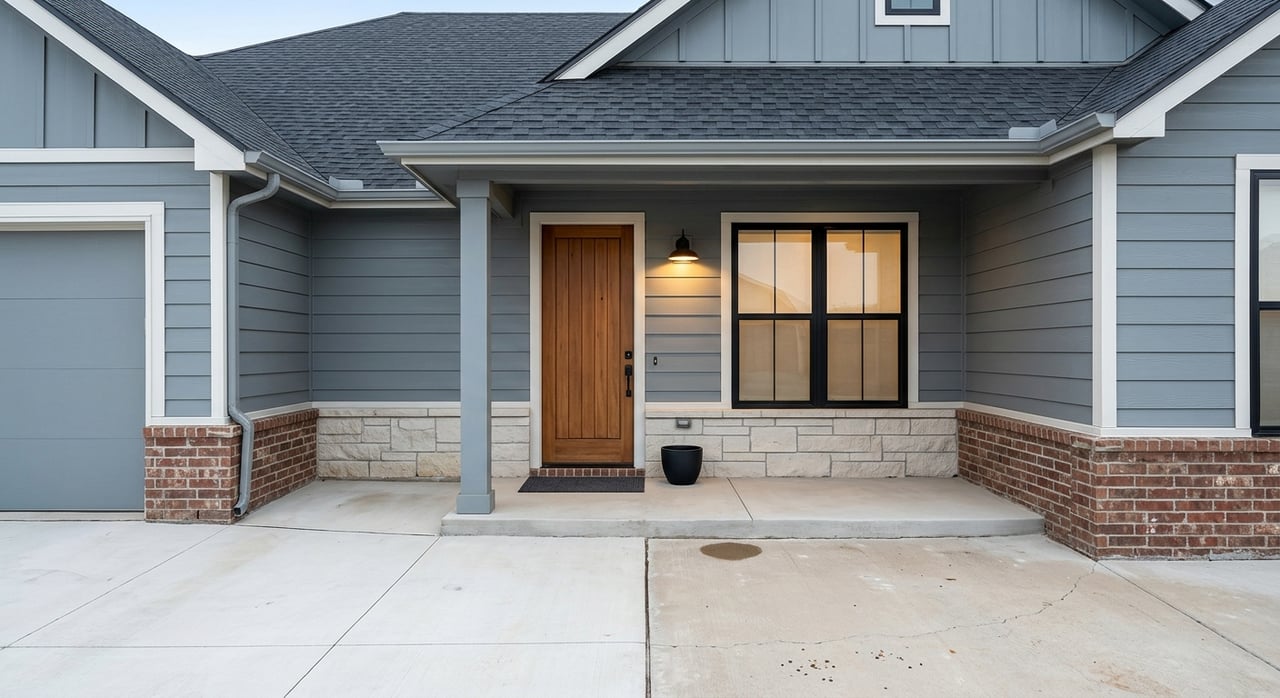
Trying to choose between a brand-new home and a resale in Spring Branch? You are not alone. In this part of Comal County, the choice is rarely just about whether a home is new or older. It is also about the lot, utilities, permits, taxes, timing, and how much uncertainty you are comfortable taking on. This guide will help you compare both paths so you can make a smart decision for your budget, timeline, and peace of mind. Let’s dive in.
Spring Branch Market Matters
Spring Branch offers a wide mix of property types and price points, which makes this decision more nuanced than in a more uniform neighborhood. Market data through April 2026 shows a median listing price of $649,900, 621 active listings, and a median 55 days on market.
You will also see major price differences across local areas. Reported neighborhood medians range from about $369,000 in Cypress Cove to around $1.1 million in Mystic Shores, with Rebecca Creek, Rivermont, River Crossing, and Cypress Springs on the Guadalupe falling in between.
That variety matters because many Spring Branch listings are not simple apples-to-apples comparisons. Inventory includes new construction, land, farms, and single-family homes, so your decision may depend just as much on site fit and infrastructure as on the age of the house.
New Construction in Spring Branch
New construction can be appealing if you want a more modern layout, newer systems, and the chance to avoid some immediate maintenance. In Spring Branch, though, buying new often means looking beyond finishes and floor plans.
If the home is not finished yet, Texas uses a separate contract form for that situation. The Texas Real Estate Commission's New Home Contract for Incomplete Construction is specifically for homes that are not completed by the builder at the time of contract.
That is important because you are not only buying real estate. You are also stepping into a construction timeline, which can bring its own questions about completion, punch-list items, and final delivery.
What New Construction Can Offer
For many buyers, new construction works best when customization and lower short-term wear matter more than speed. You may have more input on design selections, and the home's major systems are typically brand new when you take ownership.
New construction can also be a fit if you are comfortable with more moving parts. In Spring Branch, that can include lot readiness, utility setup, septic planning, well questions, and permit status depending on the property.
What to Watch With New Construction
A new home is not the same as a risk-free home. TREC notes that licensed home inspections are limited visual surveys and basic performance evaluations of substantially completed one-to-four-family homes. They are not destructive tests or full code inspections.
That means an independent inspection still matters, even on a new build. A home can be brand new and still have workmanship issues, incomplete details, or items you want addressed before closing or before warranty periods end.
Warranties are another area where buyers should slow down and read carefully. Texas A&M's Real Estate Center notes that Texas law does not require a builder warranty for a site-built home, even though some builders do offer one.
If a home warranty or residential service contract is included, it is not the same as homeowners insurance. The Texas Department of Insurance says buyers should treat that coverage as a separate contract with its own terms and limitations.
Resale Homes in Spring Branch
Resale homes appeal to buyers who want to see the actual property before they commit. In Spring Branch, that can be a major advantage because listings vary widely and may include waterfront settings, horse properties, gated-community homes, and more typical single-family options.
With a resale, you can evaluate the finished home, the lot, the landscaping, drainage patterns, and the surrounding setting as they exist today. That can make decision-making feel more concrete, especially if you want fewer unknowns.
What Resale Can Offer
Resale often works well if your priority is speed. If you want to move sooner, compare existing homes side by side, and avoid waiting on construction, resale may be the cleaner path.
It can also be easier to judge value in person. You are looking at the actual condition of the home and site rather than trying to project what the finished product will look like after construction wraps up.
What to Watch With Resale
Resale homes come with a different kind of due diligence. TREC's inspection standards still apply, which means the inspection is a limited visual survey of accessible systems and components rather than a complete reconstruction of the home's history.
For that reason, visible condition and prior maintenance matter a lot. An inspector may identify defects that can be seen, but you still need to understand that no inspection fully tells the story of every past repair or long-term wear item.
Warranties also tend to be more limited on resale homes. If a seller includes a third-party home warranty, the Texas Department of Insurance says it is still a residential service contract, not homeowners insurance, and coverage may be narrow.
Key Spring Branch Questions to Ask
In Spring Branch, the biggest difference between new construction and resale is often not the age of the home. It is whether you would rather evaluate a construction process or an existing-condition process.
Here are the local questions that matter most:
- Is the property already built, partially built, or just a lot?
- If it is land or a build site, is the lot ready for construction?
- Is the home connected to sewer, or does it use an on-site septic system?
- Does the property depend on a private well?
- Are required county permits complete?
- Is the site affected by floodplain considerations?
- What might the tax bill look like after the property is fully improved?
For many Spring Branch properties, these questions are not small details. They can shape your budget, your timeline, and your comfort level with the purchase.
Permits, Septic, and Wells
This is one of the biggest reasons a Spring Branch purchase deserves careful local guidance. In unincorporated Comal County, many builds require county permits before construction, including septic-related permits and, depending on the site, floodplain or driveway and utility permits.
Comal County states that its Engineer's Office handles addressing and permit processing for Spring Branch. For septic systems, TCEQ says on-site sewage facilities must be designed from a site evaluation that accounts for local conditions.
If a property uses a well, the water side matters too. The Comal-Trinity Groundwater Conservation District says a well operating permit is required for each non-exempt well used to produce water.
For a resale home, some of this work may already be in place. For a new build on acreage or raw land, these items can become a significant part of the buying process.
Property Taxes Can Look Different
Taxes are another area where new construction and resale can feel very different after closing. The Texas Comptroller says appraisal districts value property at market value, and new construction is commonly appraised using the cost approach.
In simple terms, the tax picture may change substantially once a home is completed. A property that was previously taxed as land or a partially improved site may later be taxed based on the value of the completed home.
The Comptroller also notes that a residence homestead's appraised value increase is generally limited to 10% annually, plus the value of new improvements, after the exemption applies. That makes it especially important to estimate what the post-completion tax bill could look like before you commit.
How to Choose the Right Fit
If you are deciding between new construction and resale in Spring Branch, start with your priorities rather than with the age of the home. The right answer is usually the one that best matches your tolerance for uncertainty, your timeline, and the type of property you want.
You may lean toward new construction if you want:
- More modern systems and finishes
- Potential customization options
- A lower chance of immediate wear-and-tear issues
- Flexibility to wait through a construction timeline
- Comfort reviewing permits, site conditions, and builder terms
You may lean toward resale if you want:
- A faster move
- The ability to see the exact finished property
- A clearer picture of the lot and surroundings
- Fewer construction-related unknowns
- More direct comparison shopping across established homes
A helpful rule of thumb is this: in Spring Branch, you are usually choosing between underwriting the construction process or underwriting the existing-condition process. Either one can be the right move, but only if it fits your goals.
A Smart Way to Compare Homes
When you are touring options, try comparing homes with the same checklist. That keeps emotion from taking over too early and helps you evaluate both new and resale homes on practical terms.
Focus on items like:
- Purchase timeline
- Lot usability and topography
- Septic or sewer setup
- Well or water source
- Permit status
- Floodplain considerations
- Inspection findings
- Warranty terms, if any
- Estimated completed tax burden
This kind of side-by-side review is especially useful in a market as varied as Spring Branch. It helps you compare what you are really buying, not just what looks best at first glance.
If you want help sorting through Spring Branch new construction and resale options, Kesley Flanagan can guide you through the details and help you compare homes with clarity and confidence. Let’s talk about your next move.
FAQs
How is buying new construction in Spring Branch different from buying a resale home?
- Buying new construction in Spring Branch may involve builder timelines, incomplete construction contract terms, permits, septic or well questions, and future tax changes after the home is completed, while a resale lets you evaluate the finished property as it exists today.
Should you get an inspection on a new construction home in Spring Branch?
- Yes. TREC says inspections are limited visual surveys and basic performance evaluations, so an independent inspection can still help identify workmanship issues or incomplete items before closing.
What should you ask about septic and wells in Spring Branch real estate?
- You should ask whether the property uses sewer or an on-site septic system, whether a private well is involved, and whether required permits or operating approvals are in place.
Why can property taxes change after buying new construction in Spring Branch?
- A new home may be taxed based on the value of the completed improvement rather than the earlier land or partially improved value, which can lead to a higher tax bill once construction is finished.
Is a home warranty the same as homeowners insurance in Texas?
- No. The Texas Department of Insurance says a home warranty or residential service contract is not the same as homeowners insurance and should be reviewed as a separate contract with its own coverage limits.
How do you decide between new construction and resale in Spring Branch?
- The best choice depends on your budget, timeline, desired property type, and whether you are more comfortable evaluating the risks of the building process or the visible condition of an existing home.